

Navigation



Today, with the rapid development of Industry 4.0 and smart grids, remote monitoring systems and automation technologies have become the key to enhancing production efficiency and ensuring equipment safety. In this complex system, the high-voltage auxiliary switch, as one of the basic components, is playing an irreplaceable role. This article will deeply analyze from three dimensions: technical principles, application scenarios, and industry value why high-voltage auxiliary switches are regarded as one of the fundamental components for achieving remote monitoring and automation.
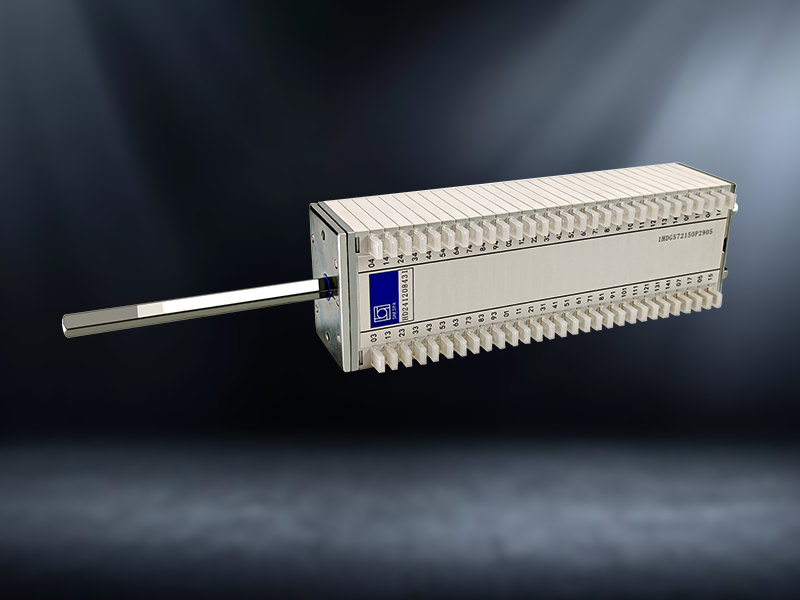
I. Technical Characteristics and Functional Positioning of High-Voltage Auxiliary Switches High-voltage auxiliary switches are electrical control components specifically designed for high-voltage environments. Their core function lies in precisely transmitting the status information of the main circuit (such as on-off, load changes, etc.) through mechanical or electronic signals. Unlike traditional low-voltage switches, high-voltage auxiliary switches must meet strict requirements such as high voltage resistance, anti-interference, and long service life to ensure stable operation under extreme working conditions. For instance, in the power transmission system, high-voltage auxiliary switches can monitor the status of circuit breakers in real time and synchronize the data to the remote monitoring platform, providing a basis for decision-making for automated dispatching.
Ii. The "Nerve Endings" of Remote Monitoring and Automation Systems
Real-time data collection and feedback
High-voltage auxiliary switches are like the "eyes" of a remote monitoring system, capable of precisely capturing the operating parameters of high-voltage equipment (such as current and voltage fluctuations), and converting analog signals into digital signals through sensors. After processing, these data can be directly uploaded to the cloud or local control system, enabling 24-hour continuous monitoring of the equipment status. For instance, in wind farms, high-voltage auxiliary switches can monitor the oil temperature of the wind turbine gearboxes. Once an abnormality is detected, an alarm will be triggered immediately to prevent major malfunctions.
2. Triggers for automated processes
On automated production lines, high-voltage auxiliary switches are often used as execution nodes for logic control. When specific conditions are detected (such as pressure reaching a threshold), it will send instructions to the PLC (Programmable Logic Controller) to drive the robotic arm to complete the assembly action. This closed-loop mechanism of "perception - decision-making - execution" has significantly enhanced production flexibility.
3. Safety protection barriers
The high-voltage auxiliary switch also undertakes the emergency shutdown protection function. For instance, in a high-pressure boiler system, if the water level exceeds the safe range, the high-pressure auxiliary switch will instantly cut off the power supply to prevent explosion accidents. This rapid response capability is incomparable to manual operation.

 Longdy's official accountLongdy Douyin



 Previous article
 Next article
 Return


