High-voltage auxiliary switch: The secret to precisely indicating the status of the main switch
In the power system, high-voltage auxiliary switches play a crucial role. They act like loyal sentries, constantly monitoring the status of the main switch to ensure the stable operation of the power system. So, how does the high-voltage auxiliary switch accurately indicate the status of the main switch? What technical principles and design wisdom lie behind this? This article will take you on a journey to find out.
I. Basic Concepts and Functions of High-Voltage Auxiliary Switches
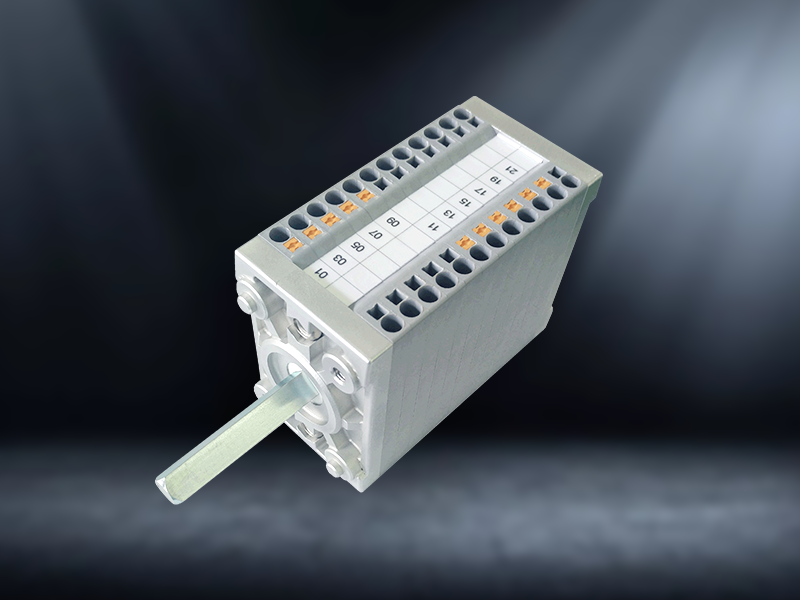
High-voltage auxiliary switches, as the name suggests, are auxiliary control devices used in high-voltage circuits. It does not directly participate in the on-off operation of the main circuit. Instead, it detects the position or status changes of the main switch and outputs corresponding signals to achieve functions such as remote monitoring and interlock control. Among numerous application scenarios, the core value of high-voltage auxiliary switches lies in their ability to accurately and promptly reflect the opening and closing status of the main switch, providing intuitive and reliable information feedback for operation and maintenance personnel.
Ii. Technical Principles for Achieving Accurate Indication by High-voltage Auxiliary Switches
1. Mechanical linkage mechanism
High-voltage auxiliary switches are usually connected to the main switch through mechanical connecting rods or cams and other mechanisms. When the main switch performs the opening and closing operation, this action will cause the contacts inside the auxiliary switch to change accordingly, thereby outputting an electrical signal. This mechanical interlocking method is simple and reliable, and it is one of the most fundamental and common working principles of high-voltage auxiliary switches.
2. Photoelectric coupling technology
With the development of technology, some high-end high-voltage auxiliary switches have begun to adopt photoelectric coupling technology. This technology uses optical signals as a medium to convert the state changes of the main switch into optical signals, and then restores them to electrical signals through photoelectric converters. This approach not only enhances the anti-interference capability but also achieves electrical isolation, further improving the safety and stability of the system.
3. Intelligent sensor integration
Modern high-voltage auxiliary switches may also integrate various intelligent sensors, such as position sensors, pressure sensors, etc. These sensors can monitor the subtle changes of the main switch in real time and analyze and process them through the built-in microprocessor, ultimately outputting more accurate status indication signals. The intelligent design enables the high-voltage auxiliary switch to maintain high accuracy and reliability even in the complex and ever-changing power environment.
Iii. Factors Affecting the Accuracy of High-Voltage Auxiliary Switches and Countermeasures
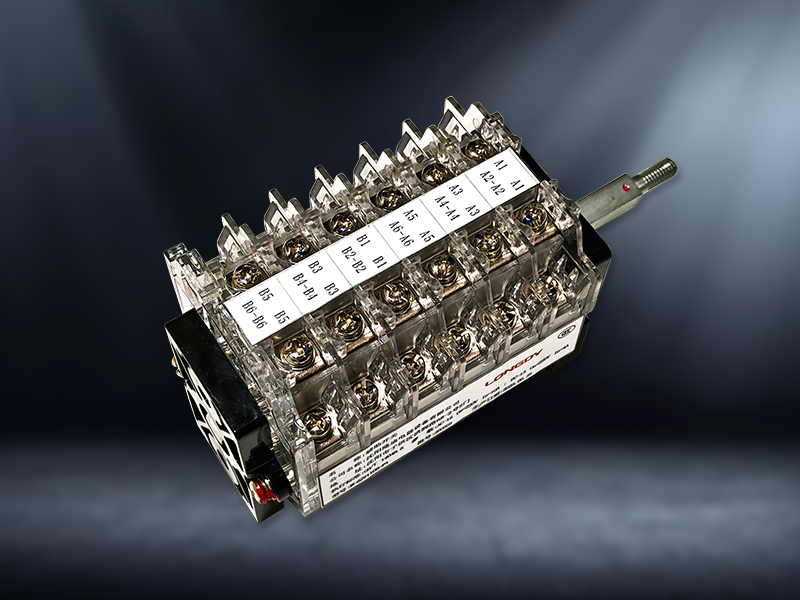
Although high-voltage auxiliary switches are already quite mature in technology, they may still be affected by various factors in practical applications, resulting in inaccurate indications. The following are some main factors and the corresponding solutions:
1. Environmental factors
Environmental factors such as temperature, humidity and vibration may all have an impact on the performance of high-voltage auxiliary switches. For instance, high temperatures may cause materials to expand, affecting the normal movement of mechanical components. A damp environment may cause problems such as a decline in insulation performance. Therefore, when choosing and using high-voltage auxiliary switches, the working environment conditions should be fully considered, and necessary protective measures should be taken, such as selecting high-temperature resistant and moisture-proof materials and strengthening sealing design, etc.
2. Installation and commissioning
Correct installation and meticulous debugging are also the keys to ensuring the accuracy of high-voltage auxiliary switches. If the installation is improper or the debugging is inaccurate, it may cause a deviation in the coordination between the auxiliary switch and the main switch, thereby affecting the accuracy of the status indication. Therefore, during the installation process, operations should be carried out strictly in accordance with the guidance manual provided by the manufacturer, and every detail should be carefully inspected during the commissioning stage to ensure that all parameters meet the requirements.
3. Maintenance and care
Regular maintenance and upkeep are equally important for extending the service life of high-voltage auxiliary switches and maintaining their good performance. Wear and tear, aging and dust accumulation during long-term operation may all cause damage to it. Therefore, it is recommended to formulate a reasonable maintenance plan, carry out regular inspections, cleaning and necessary replacement work to ensure that the high-voltage auxiliary switch is always in the best working condition.
4. Conclusion
In conclusion, the high-voltage auxiliary switch accurately indicates the status of the main switch through ingenious mechanical design, advanced photoelectric coupling technology, and intelligent sensor integration. However, to fully leverage its effectiveness, attention should also be paid to multiple aspects such as environmental factors, installation and commissioning, as well as maintenance and upkeep. Only in this way can we ensure that high-voltage auxiliary switches play their maximum role in the power system and safeguard the safe operation of the power grid. In the future, with the continuous advancement of technology and the increasing demand for applications, we have every reason to believe that high-voltage auxiliary switches will become more intelligent and reliable, contributing to the construction of a stronger and more efficient power network.






 Longdy's official account



 Previous article
 Next article
 Return


