In-depth Analysis: Matching Principles and Selection Basis for Contact Capacity of High-Voltage Auxiliary Switches in Electric Mechanisms
In today's rapidly developing field of industrial automation, electric mechanisms, as core actuating components, their performance and reliability are directly related to the stable operation of the entire system. In this complex system, high-voltage auxiliary switches play a crucial role, especially the precise matching and reasonable selection of their contact capacity, which are the key to ensuring the efficient and safe operation of the system. This article will delve into the matching principles and selection basis of contact capacity for high-voltage auxiliary switches in electric mechanisms, providing valuable references for engineers and technicians in related fields.
I. Understand the importance of high-voltage auxiliary switches
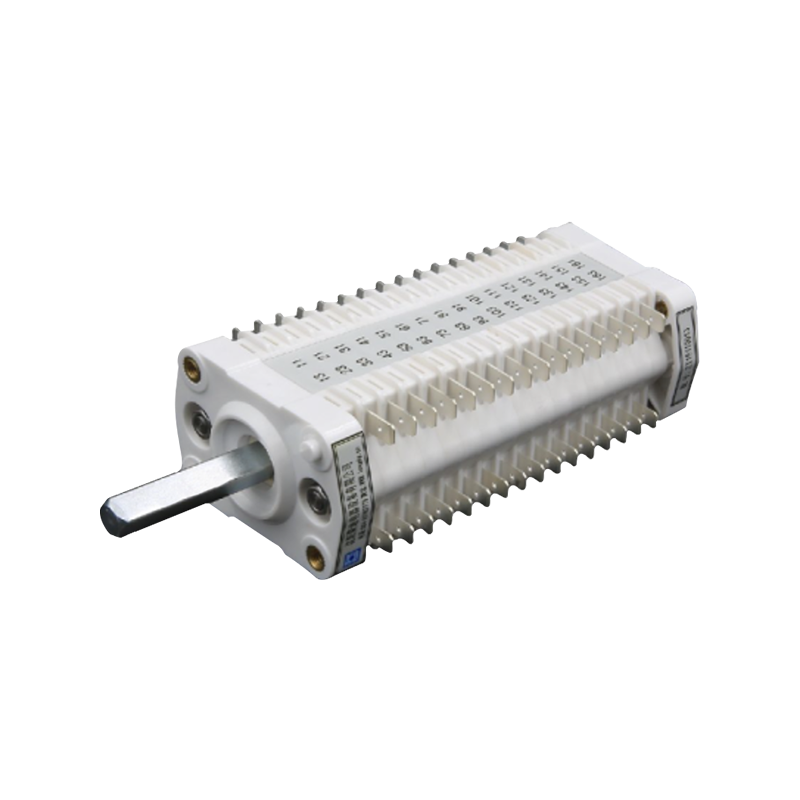
The high-voltage auxiliary switch serves as a bridge between the control circuit and the main circuit, responsible for connecting or disconnecting the circuit under specific conditions to achieve precise control of the electric mechanism. Because it often needs to handle environments with high voltage and large current, the design and selection of its contacts are particularly important. An appropriate contact capacity not only ensures the durability of the switch itself but also effectively prevents faults caused by overload, thereby enhancing the reliability and service life of the entire system.
 Ii. Contact Capacity Matching Principle
1. Load characteristic analysis: The primary task is to conduct a comprehensive analysis of the load characteristics of the electric mechanism. This includes understanding the maximum operating current, peak starting current, continuous working time, and possible impact loads, etc. Based on these data, the minimum rated current value of the required contacts can be initially determined to ensure that the switch can withstand all electrical stresses under normal working conditions.
2. Safety margin consideration: To deal with unexpected situations or transient overloads, sufficient safety margin should be reserved in the design. It is generally recommended to choose a model with a contact capacity slightly higher than the actual maximum demand. This can effectively prevent damage caused by short-term overloading and improve the system's fault tolerance.
3. Environmental factor considerations: Factors such as temperature, humidity, and corrosive gases in the working environment can also affect the performance and lifespan of contacts. For instance, in high-temperature environments, the aging of materials accelerates, which may lead to an increase in contact resistance. A damp environment is prone to cause a decline in insulation performance. Therefore, when making a choice, these external conditions should be fully considered and products with the corresponding protection level should be selected.
4. Dynamic response requirements: For applications that require rapid switching, attention should also be paid to the action speed of the switch and the rebound phenomenon of the contacts. High-quality high-voltage auxiliary switches should have rapid opening and closing capabilities and good arc-extinguishing performance to reduce arc generation and protect contacts from damage.
Iii. Detailed Explanation of Selection Basis
1. Manufacturer qualifications and reputation: Give priority to choosing high-voltage auxiliary switches produced by brand manufacturers with good market reputation and international certifications (such as ISO, CE, etc.). These manufacturers usually have stricter quality control systems and more complete after-sales service networks, which can provide users with more reliable products and support.
2. Technical parameter comparison: Carefully compare the technical specification sheets of different products, with a focus on key indicators such as contact material (silver alloy, copper alloy, etc.), rated voltage/current range, mechanical life, and electrical life. At the same time, attention should also be paid to the size compatibility of the product to ensure it can be smoothly installed into the existing equipment frame.
3. Reference to practical application cases: Review successful application cases of similar products, especially those project experiences that are similar to your application scenarios. By drawing on others' practical experience, one can avoid detours and find the most suitable solution more quickly.
4. Cost-benefit analysis: Although high-quality products are often more expensive, in the long run, investing in high-performance high-voltage auxiliary switches can significantly reduce maintenance costs and downtime losses, and improve production efficiency. Therefore, when making decisions, a balance between initial investment and later operating costs should be comprehensively considered.
4. Conclusion
In conclusion, the matching principle and selection basis of the contact capacity of high-voltage auxiliary switches in electric mechanisms is a comprehensive consideration process involving multiple factors. Only by fully understanding the load characteristics, considering the environmental impact, following safety standards, and conducting meticulous selection in combination with actual needs can the most suitable product be chosen to ensure the stable operation and long-term reliability of the electric mechanism. It is hoped that this article can provide you with useful guidance and assistance when choosing and using high-voltage auxiliary switches.






 Longdy's official account



 Previous article
 Next article
 Return


